Institutionalizing Goodness. Redefining Success.
We have never been more prosperous.
Are we any happier?
Humanity has made extraordinary progress. We are wealthier, more connected and more productive than ever before. Yet greater prosperity has not necessarily made us proportionately happier.
Free · private · 15 questions · about 4 minutes · no sign-up

Because people move towards what society measures.
Today, success is often defined by narrow measures such as money, power and influence — and increasingly by money alone. People naturally move towards what society measures, values and appreciates. So society drifts towards this narrow idea of success, and away from goodness. Rising prosperity can then live side by side with anxiety, disconnection and declining contentment.
The Institute of Goodness does not reject ambition, achievement or prosperity. It seeks to widen the meaning of success by making goodness one of its measures. This website explains what goodness is, why it is necessary, what we are doing about it — and what you can do.
- What we do not measure, we do not notice.
- What we do not notice, we do not value.
- What we do not value, we do not nurture.
- Making goodness measurable makes it visible. What is visible is appreciated — and what society appreciates, people aspire towards.
- Our proposition · Institute of Goodness
Goodness is the alignment of intent, action and impact toward the well-being of others.
It is not a vague sentiment. It is made of concrete qualities — integrity, empathy, fairness, responsibility and a genuine willingness to contribute beyond oneself.
Goodness is often mistaken for kindness alone. It is much more: every thought, choice and action that improves one or more dimensions of human life without diminishing another. And goodness only exists when it is extended outward — to the neighbour, the community, the nation and nature itself.
Goodness, explained- 1IntentWhat we mean to do
- 2ActionWhat we actually do
- 3ImpactWhat it does for others
- ✓All three aligned“Knowing goodness is not the same as practising goodness.” — Ravi Sharma
Happiness is the desired state. Goodness is the action that takes us there.
Happiness is one of humanity’s most universal hopes, yet it cannot be chased as an outcome on its own. It grows out of the way we live, the relationships we build and the meaning we create through our actions.
For a life to be truly fulfilling, our actions must nourish all five dimensions of human life — the Pentad of Life: physical, mental, emotional, social and spiritual. Good actions strengthen the person who receives them, the person who performs them, and the society in which both live.
The Pentad of Life, in the founder’s column- 1Practising goodnessIntegrity · Responsibility · Compassion · Respect · Stewardship
- 2Nourishing the Pentad of LifePhysical · Mental · Emotional · Social · Spiritual
- 3Greater wellbeingVitality, clarity, balance, belonging and meaning
- 4Sustainable happinessWhich needs balance across all five dimensions
Every institution depends on the character of the people who run it.
Societies invest enormously in roads, digital networks, finance and institutions. Rules can discourage wrongdoing, technology can improve transparency and regulation can create accountability — but no system can fully replace integrity, responsibility, compassion, respect and stewardship in people.
Goodness that has become a habit.
The collective strength of values and behaviour in individuals, organisations and institutions that lets a society work with trust, responsibility and integrity. It is built when goodness becomes habitual rather than exceptional.
Low trust is expensive.
We verify, re-verify, attest, notarise and litigate. Enforcing a commercial contract in India was estimated to take around 1,445 days — nearly four years. Every such cost is one that a higher-trust society simply does not pay.
Good conduct pays.
When people act with integrity, responsibility, compassion and fairness, trust grows — and trust reduces friction. The benefit that builds up is the Character Dividend: not merely a moral gain, but a social and economic asset.
Practising goodnessCharacter InfrastructureTrustCharacter Dividend
Five values that turn goodness into everyday behaviour.
The Institute expresses goodness through five foundational values. Together they give us a simple, complete vocabulary for turning goodness from an abstract ideal into the way we actually live and work.
Integrity
Doing what is right with honesty, fairness and moral courage — even when it is difficult, or when nobody is watching.
02Responsibility
Taking ownership of our actions, fulfilling our duties and contributing meaningfully to family, community and society.
03Compassion
Understanding and caring for others through kindness, empathy, inclusion and a willingness to help.
04Respect
Recognising the dignity of others; respecting differences, relationships, institutions, laws and the shared spaces in which we live.
05Stewardship
Using resources responsibly and caring for society, nature and the planet, so that what we inherit is protected for future generations.
To institutionalize goodness and redefine success.
The Institute of Goodness exists to help create a society that is not merely more prosperous, but also more trusting, harmonious and happier. Goodness should not remain only a personal virtue or an occasional act. It must become part of how we educate people, run organisations, build institutions and measure progress.
Our philosophy is rooted in the Indian idea of Vasudhaiva Kutumbakam — the world is one family. A family cannot flourish through individual achievement alone; it needs responsibility, reciprocity, compassion, respect and care.
That needs a society in which goodness is
TaughtPractisedMeasuredRecognizedCelebrated
- 1Redefine success
- 2Practise goodnessThe five foundations
- 3Nourish the Pentad of LifePhysical · Mental · Emotional · Social · Spiritual
- 4Build Character Infrastructure
- 5Create trust
- 6Generate the Character Dividend
- 7Build a happier society
Three pillars that turn the idea into action.
The Institute puts its philosophy to work through three connected initiatives: practise goodness through education, measure it so that it can be seen and improved, and recognise it so that it multiplies.

Personal Social Responsibility (PSR)
Companies are expected to take responsibility towards society. So are individuals. PSR brings practical, experiential learning from school through higher education, built on the five foundations — not only to teach values, but to give young people the chance to practise them.
The PSR curriculum
The Goodness Index™
A research-based framework built on the five values, turned into behaviours and indicators that can be observed in individuals, organisations and societies. It never labels anyone “good” or “bad”; its purpose is reflection, improvement and recognition.
How the Index works
Mission Chetna
Thousands of people quietly improve the lives of others, often without visibility, resources or recognition. Mission Chetna finds, connects, encourages and strengthens them — because goodness grows when goodness is recognized.
Meet the Chetna HeroesPractiseMeasureImproveRecogniseMultiply
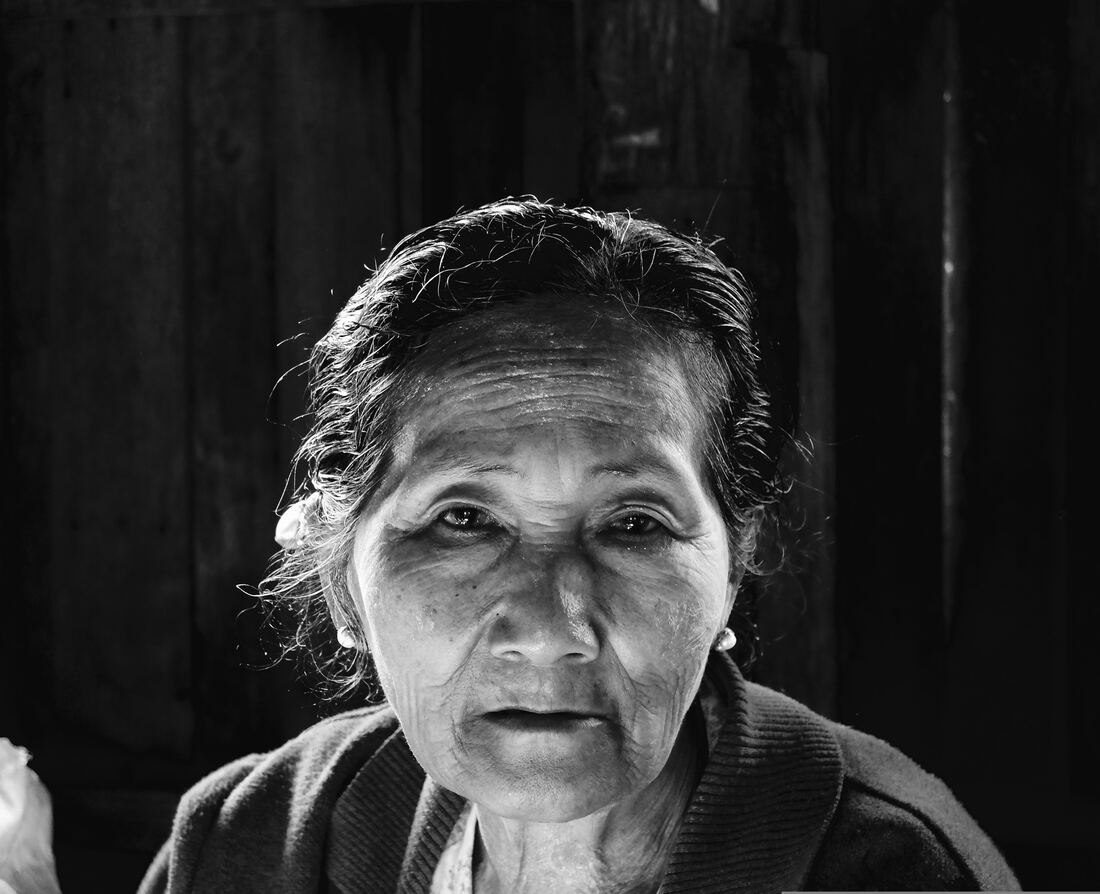
The people who quietly hold society together
Chetna means awareness — being awake to what is around you. Across India, many people give their lives to others and almost nobody knows who they are. Mission Chetna records their work, connects them with one another and with expertise, and recognises them publicly and with dignity.
A school on a pavement
A retired teacher who runs classes for construction workers’ children on the footpath beside the site.

A pond brought back to life
A farmer who has spent a decade reviving a dead pond that his village had written off.
A kitchen open to strangers
A family that has cooked for anyone who arrives hungry, every day, for twenty years.

The keeper of the accounts
A young woman who taught herself accounting to keep a village self-help group honest.
The work so far, and the road ahead
The work underlying the Institute has already touched more than 10 million lives through a network of 70+ social organisations across 11 Indian states. The Institute is now building the research, educational partnerships and institutional frameworks needed to take these ideas to scale.
Build
PSR pedagogy and curriculum · Goodness Index™ instruments · digital and evidence platform · pilot network
Validate
Pilots across schools, colleges and organisations · independent evaluation · the first India Goodness Report
Demonstrate
500 schools · 25 colleges · about 2.75 lakh learners · 100+ organisational Goodness Index™ pilots
Scale
Partner-led replication in India and abroad — and, in time, a University of Goodness
Goodness cannot be built by one organisation. It needs you.
It needs schools, universities, researchers, businesses, governments, social organisations — and individuals. Here are five places to begin, starting today.
Know where you stand
Fifteen honest questions about what you actually did — not what you would do. A score out of 100, your strongest foundation, and one small way to grow. Free and private.
Check Your Goodness ScorePractise it today
CompassionOne small act, chosen for today.
One act a day, drawn from the five foundations. Nothing is tracked — the tick lives in your browser.
Bring PSR to your institution
Schools, colleges and workplaces can join the PSR programme and give their students and teams the chance to practise the five foundations.
Join the PSR programme 4Become a Chetna Hero — or nominate one
If you, or someone you know, has been quietly changing lives without recognition, Mission Chetna would like to find you and help the work grow.
Nominate a Chetna Hero 5Research, partner or support
We invite universities to join research on the Goodness Index, and welcome policymakers, companies and institutions who want to explore how goodness can sit beside the usual measures of progress.
Partner with the Institute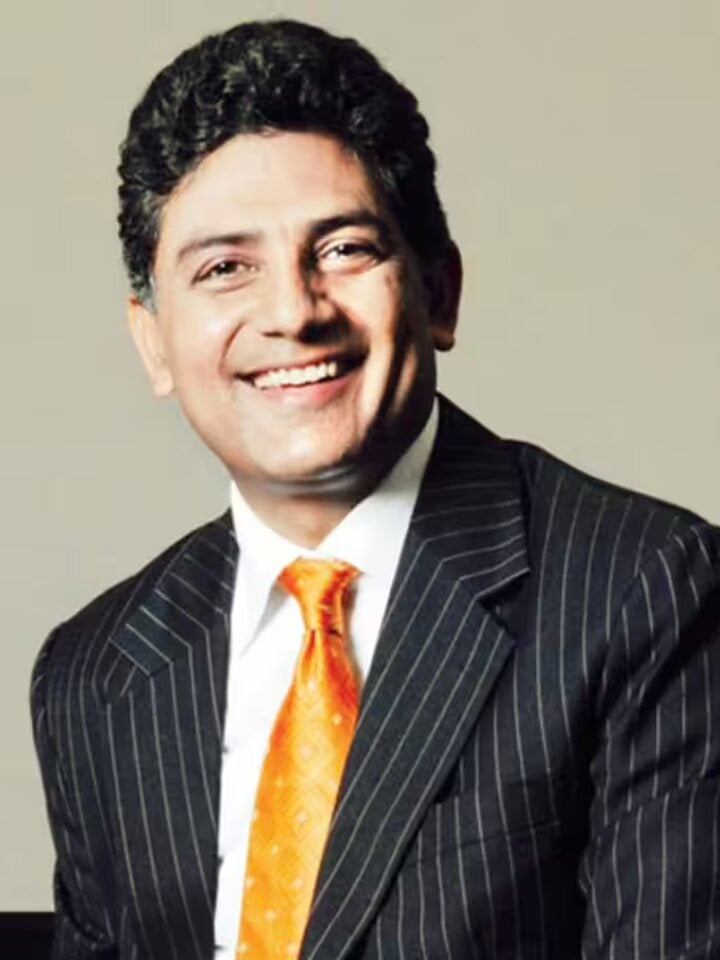
Ravi Sharma — from global CEO to architect of goodness
From a village in rural Uttar Pradesh to IIT Roorkee, and on to become one of India’s youngest CEOs of a telecom multinational, leading multi-billion-dollar enterprises across continents. At 50, at the height of that success, he stepped away from the boardroom to give his life to a larger purpose — the one thing the numbers never measured.
“GDP may determine the size of a nation, but character determines its soul.”
Ravi Sharma · The road to Viksit Bharat 2047, Business India
- Former Chairman, Boards of Governors — IIIT Una and IIIT Nagpur, appointed by the President of India
- Former CEO — Alcatel-Lucent South Asia, Videocon Telecom and Adani Power
- Founder-President, IIT Alumni Council — 50,000+ IITians for nation-building
- Chairman, Mission Chetna Foundation — 70+ social organisations, 10 million+ lives
- Distinguished Alumnus, IIT Roorkee · columnist, Business India · published poet
The founder, in his own voice
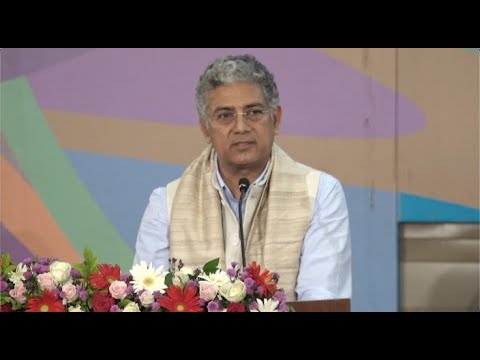
84th Convocation Address at TISS Mumbai

Ravi Sharma at IIT: a talk on purpose and success (Hindi)

How the truth of life changes (Hindi)

Live conversation with Ravi Sharma (Hindi)

One idea that can change your world (Hindi)

Just Sanjay on Ravi Sharma (Hindi)
From the founder’s column
The ideas behind the Institute, as published in Business India.

Building the Character Infrastructure of India
Physical infrastructure can transform an economy. Character Infrastructure can transform the quality of life.

Viksit Bharat: Beyond economics
A developed nation must be measured not only by the wealth it creates, but by the quality of life, institutions and society it builds.
Beyond examinations
Examination reforms should be only the beginning of educational transformation.

The Pentad of Life
Why human performance must be measured across five dimensions.

Richer, not Happier
The hidden cost of prosperity without goodness.
Receive the latest news and analysis from the Institute of Goodness
Almost there — your email app opens with the message ready to send.